


Unfreeze Your Shoulder; Reclaim Your Active Life
We recently worked with a patient who came to us after struggling with shoulder pain for several months. While she hoped it would go away on its own, it only got worse over time. When she visited us, she was also struggling to lift her shoulder overhead or reach behind her back.
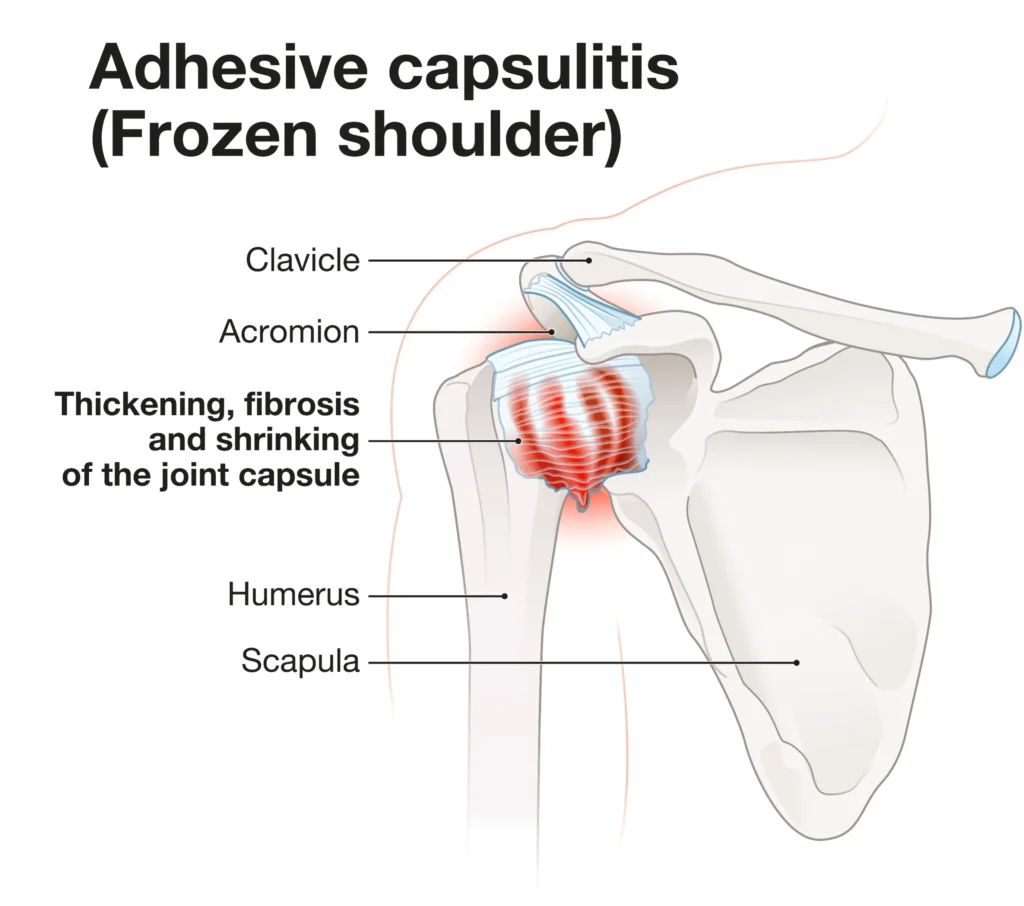
This patient had developed adhesive capsulitis, more commonly known as frozen shoulder. It gets that name from the fact that the condition causes the shoulder to “freeze up” after a period of intense pain.
A frozen shoulder will eventually “unfreeze,” but that process can take anywhere from 1 to 3 years. Fortunately, the team at First Choice Physical Therapy can help you manage your symptoms and facilitate a more efficient recovery.



Reignite Your New Year’s Resolutions
Did you set big goals last month? And have they already started to fizzle out?
The good news: You’re not alone. The better news: First Choice Physical Therapy can help you reignite your New Year’s resolutions so you can achieve your health and wellness goals all year long.
- Is pain holding you back? Our physical therapists will dig down to the root cause and find a lasting solution.
- Did you burn out? Many people go a little too hard at the start of the new year. We’ll help you find a sustainable health or fitness program to stay with you for life.
- Are you overwhelmed by choice? One of our comprehensive assessments can give you a sense of any biomechanical issues or muscular imbalances in your body–helping to hone your focus.
No matter what goals you set on January 1st, our team wants to see you accomplish them. Schedule an appointment with us today to get started!
What Causes Frozen Shoulder?
The condition develops when the capsule of connective tissue that wraps around your shoulder thickens and tightens, restricting the joint. However, researchers aren’t entirely clear why this happens. Certain factors can increase your risk:
- Being a woman between the ages of 40 and 60 years old
- Having certain diseases, including diabetes, thyroid conditions, or cardiovascular disease
- Immobilizing your shoulder after an injury or surgery.
Everyone is so awesome! We have come to First Choice Physical Therapy on and off for the last few years. Every time has been very helpful for the issues that we went for! So grateful to have all of the team be a part of our healing experiences!
– Google 5-Star Review
Understanding the Three Phases Of Frozen Shoulder
One reason frozen shoulder recovery can take so long is that the condition progresses through three distinct phases, each with its own set of symptoms and concerns. Here’s what you need to know about each one:
Freezing Phase
This initial stage is marked by increasing pain and stiffness in the shoulder. During this phase, we focus on maintaining your shoulder’s range of motion to help reduce stiffness and improve comfort.
Duration
Anywhere from six weeks to nine months
Symptoms
- A gradual onset of pain that worsens with movement
- Increased stiffness in the shoulder
- Pain is often worse at night, disrupting sleep
Frozen Phase
The frozen stage involves less pain but greater stiffness, significantly restricting your shoulder’s movement. We’ll focus on improving your shoulder mobility using stretching or manual therapy techniques.
Duration
Anywhere from four to six months
Symptoms
- Decreased pain compared to the freezing stage
- Significant stiffness and difficulty moving the shoulder
- Everyday movements like reaching overhead or behind the back become challenging
Thawing Phase
In the final stage, your pain decreases, and your shoulder’s range of motion gradually returns. However, it’s important to continue physical therapy to ensure you make a full recovery.
Duration
Anywhere from six months to two years
Symptoms
- Gradual improvement in mobility as scar tissue around the shoulder capsule begins to loosen and break down
- Pain continues to decrease
Physical Therapy and Frozen Shoulder: What You Need to Know
Physical therapy plays an essential role in helping you manage frozen shoulder symptoms at all three stages. Our team will work with you to develop a comprehensive treatment program, pulling from a range of different techniques based on your current symptoms:
Acute Pain Management
We’ll help you manage shoulder pain (especially in the freezing phase) with techniques such as dry needling, Kinesio taping, hot and cold therapy, and more.
Manual Therapy
Various hands-on techniques can gently mobilize the shoulder joint, improve joint capsule movement, and reduce pain.
Mobility Exercises
Targeted exercises and techniques help improve your shoulder’s range of motion in all directions, gradually restoring your ability to reach, lift, and rotate your arm.
Strengthening Exercises
Strengthening the muscles surrounding the shoulder joint enhances stability and supports improved function.
Management Strategies
Understanding frozen shoulder is an integral part of managing it. We’ll help you navigate the difficulties of the condition, including identifying which stage you’re in and providing you with home exercises to help alleviate your symptoms.
Exercise of the Month
Shoulder Internal Rotation Stretch
(Shoulders, Rotator Cuff)
Start by standing up straight holding a towel behind your back with one end over your shoulder and the other by your lower back. Grab the bottom end of the towel with your hand on the side you want to stretch and gently pull up on the towel with your other hand. Hold for 30 seconds. 2 Sets, 1 Rep. (Materials needed: towel)
Service Spotlight: Ultrasound Therapy
Ultrasound therapy is a specialized form of physical therapy that utilizes mechanical energy to facilitate the healing process. It can be used as a way to manage or relieve pain, treat injuries, and improve your ability to perform daily activities. If you are experiencing pain or have recently sustained an injury, ultrasound treatments may be beneficial for you. Our innovative care strategies at First Choice Physical Therapy will help you find quick relief.
What Does Ultrasound Treat?
Ultrasound treatments are vague in the sense that they can treat a wide variety of conditions. It is not limited to one specific ailment or region of pain. Some common conditions that ultrasound helps treat include, but are not limited to:
- Arthritis
- Bursitis
- Tendinitis
- Frozen shoulder
- Muscle spasms
- Fractures
- Sprains, strains, and tears
Ultrasound treatments help to relieve pain, increase blood flow, reduce swelling and inflammation, and promote tissue healing. By doing so, it is able to successfully treat and reduce the painful symptoms of multiple conditions.
How Does Ultrasound Therapy Work?
The technology behind ultrasound treatments involves the use of sound waves. These sound waves are used to treat conditions affecting the muscles, ligaments, and bones by creating vibrations that generate heat. When the tissues vibrate, friction is produced at the molecular level, which causes the temperature of the tissues to increase. While heating packs can be effective in warming up an affected area, they are unable to reach the tissues in the same way that ultrasound technology can.
When an ultrasound treatment is being conducted, our physical therapists will generously put gel on the surface of the ultrasound applicator in order to minimize friction and promote the transmission of the sound waves. These waves are then absorbed by your tendons, ligaments, and connective tissues.
What Happens in the Body During an Ultrasound Treatment?
There are two main ways that ultrasound works to heal and repair damaged tissues in the body:
Thermal Benefits
The heat from the ultrasound waves increases blood flow to the affected area, bringing vital nutrients and oxygen to damaged tissues. This enhanced circulation helps remove metabolic waste products and accelerates the natural healing process.
Non-thermal Benefits
The mechanical vibrations from ultrasound can also trigger cellular changes at a microscopic level, stimulating cell membrane activity and encouraging tissue repair even without producing significant heat.
How Do I Know If It Will Work for Me?
At First Choice Physical Therapy in Spring Creek, Carlin, Elko, NV, and Elko Spine and Rehabilitation, our highly trained physical therapists will design a treatment plan for your specific needs. This could include ultrasound treatments, depending on the nature of your condition and contributing symptoms.
At your initial appointment, a physical therapist will conduct a physical exam that will help in the diagnosis of your condition and how it should be treated. Your treatment plan will also take into account your medical history and any additional health restrictions you may have.
If you are suffering from pain or injury, don’t wait any longer. Contact us today to schedule your appointment. First Choice Physical Therapy will get you back to your optimum levels of physical function in no time!
Recipe: Anti-Inflammatory Golden Turmeric Smoothie
Support your shoulder recovery from the inside out with this delicious anti-inflammatory smoothie. Turmeric is known for its powerful anti-inflammatory properties, which can help reduce joint pain and stiffness—perfect for anyone recovering from frozen shoulder or other musculoskeletal conditions.
Ingredients
- 1 cup unsweetened almond milk
- 1 frozen banana
- 1 teaspoon ground turmeric
- ½ teaspoon ground ginger
- 1 tablespoon honey or maple syrup
- ¼ teaspoon cinnamon
- Pinch of black pepper (enhances turmeric absorption)
- 1 tablespoon chia seeds (optional)
- ½ cup ice
Instructions
Combine all ingredients in a blender and blend until smooth. Pour into a glass and enjoy immediately. This smoothie is best consumed in the morning or after your physical therapy session to maximize its anti-inflammatory benefits.

Ready to Break Free From the Icy Grip of Frozen Shoulder?
If you suspect you have frozen shoulder, schedule an appointment at First Choice Physical Therapy. Physical therapy is essential for managing the condition in all three phases, and the earlier you can begin treatment, the better your outcomes will be. Our team is here to help you manage pain, restore mobility, and understand your shoulder’s movement patterns.
Don’t let frozen shoulder hold you back. Call us today to schedule your initial evaluation!
Sources: https://www.ncbi.nlm.nih.gov/pmc/articles/PMC7031440/