

How Your Gait Can Reveal the Source of Pain
How Your Gait Might Be Telling You Something Important About Your Health
Have you ever truly paid attention to the way you walk? Most of us don’t until we start feeling pain. Interestingly, the way we walk can tell a lot about what’s going wrong in our bodies. Our physical therapists are like detectives when it comes to observing how someone walks. We can often pinpoint the source of pain just by watching you walk for a few minutes. So, let’s explore how it’s done, what signs we look for, and how we treat them.
Your walking style can reveal the source of pain in your body, particularly in your hip, knee, and foot.


Exercise of the Month
Bridging
Lie on your back with knees bent and feet flat on the floor. Tighten your core and lift your hips toward the ceiling, squeezing your glutes at the top. Lower slowly and repeat to strengthen your hips and lower back.
Gait Analysis
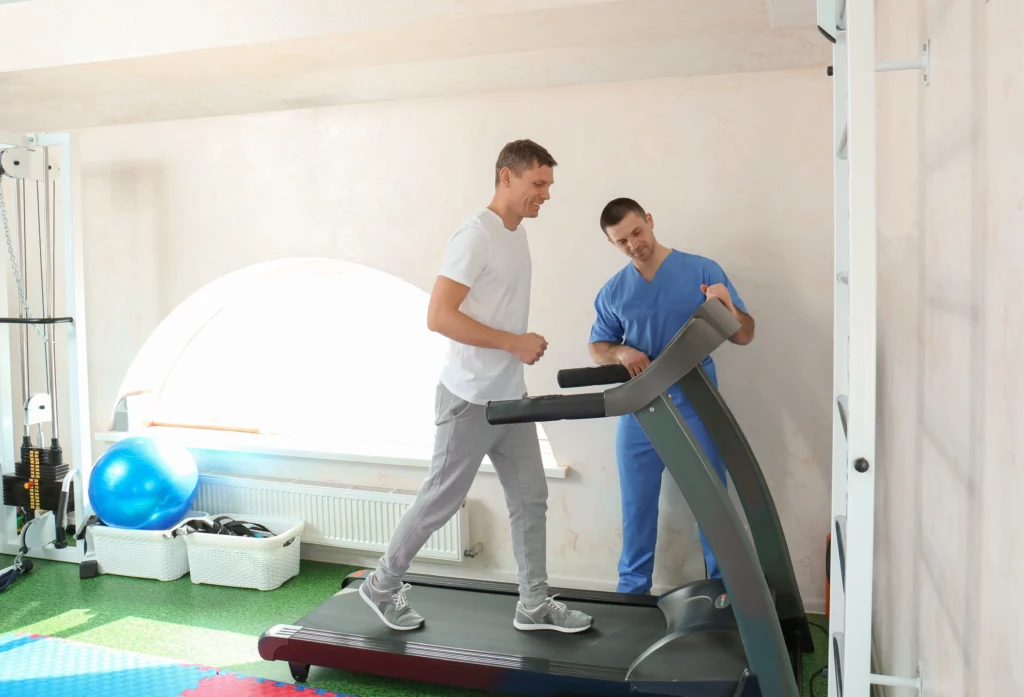
Gait is defined as the style or manner a person has when they walk. Our physical therapists will perform a gait analysis to help identify a variety of conditions and causes of pain. The analysis focuses on your entire body as you walk. Watching how you move helps us identify the following:
- How and where you shift your weight during steps
- How you adjust to the pressure on your joints
- How you absorb the impact when the foot hits the ground
We’ll also be looking for:
- Symmetry: Are you favoring one side of the other?
- Stride length: Is one step shorter than the other?
- Foot positioning: Are your feet pointing straight ahead, or are they angled?
- Smoothness of Movement: Does your walk look fluid, or is it jerky and hesitant?
By asking about the quality and location of your pain and observing the unique ways your body moves, we can identify the source of your discomfort. And, with the information from our detailed analyses, we can determine the right treatment plan to address your pain, whether in the ankle, knee, or hip.
Your Walk “Talks the Talk”
If your hip is the culprit, your gait might show a “limping” pattern, where you favor one leg and appear to minimize the time spent on the affected leg because it hurts. This can look like you’re hesitating or shifting your body side to side with each step. Our PTs notice these subtle shifts when they see that your stride is shorter on one side.
Knee Pain
Knee pain changes your gait by making you less likely to fully straighten the affected leg when you step. This can cause a noticeable limp or a “shuffling” effect because of the effort put into avoiding bending the knee too much.
Foot and Ankle Pain
Foot and ankle pain can alter your gait in several ways, depending on where the pain is located. You might walk on the tip of your toes or excessively on the heel to avoid putting pressure on the painful part. This can lead to an uneven or awkward walk.
Book an Appointment at First Choice Physical Therapy Today!
The path to recovery is different for everyone. We’ll create a personalized physical therapy plan designed to alleviate your pain and help you prevent it from returning.
- Manual Therapy: Hands-on techniques to alleviate and manage pain and improve range of motion in the affected joint.
- Exercises: Targeted movements to stretch and strengthen the muscles around the affected area to correct weakness and improve mobility.
- Assistive Devices: Temporary use of tools like braces, crutches, or walking boots to help promote healing while you recover.
- Education: Teaching you about strategies and techniques to avoid further injury.
Pain should not be a normal part of your daily life. If you notice changes in the way you walk or are experiencing pain in your hip, knee, or foot, it’s crucial to seek professional help. Early intervention can prevent further injury and help you maintain your mobility and quality of life.
Sources: https://www.choosept.com/guide/physical-therapy-guide-to-osteoarthritis-of-hip, https://www.physio-pedia.com/Gait

Tips for A Safe and Healthy 4th
As we prepare for the 4th of July celebrations, here are key tips to ensure a joyful and healthy Independence Day:
- Healthy Grilling: Opt for healthier grilling choices. Lean meats, fish, and a variety of vegetables can make your barbecue both delicious and nutritious.
- Sun Safety: Apply sunscreen, wear protective clothing, and seek shade to prevent sunburn.
- Fireworks Caution: Set off fireworks in a clear, open space away from buildings, vehicles, and vegetation. Always keep a safe distance and remember to have a bucket of water, a garden hose, or a fire extinguisher nearby.
Enjoy the 4th while keeping your well-being at the forefront. We wish you a safe and happy Independence Day!
Walk Your Way To Better Health
Walking is not just a leisurely activity; it offers a myriad of health benefits that contribute to overall well-being. Research shows that regular walking can improve cardiovascular health, boost mood, and even enhance cognitive function.
Walking at a brisk pace for just 30 minutes a day can significantly reduce the risk of heart disease, stroke, and diabetes. How? Well, walking:
- Strengthens the heart
- Improves circulation
- Promotes weight management
- Enhances bone health
- Helps maintain healthy blood pressure levels
Plus, walking is a low-impact exercise that is accessible to people of all ages and fitness levels. When you walk outdoors, it exposes the body to natural sunlight, which is a vital source of vitamin D that improves immune function, mood regulation, and bone health.
So, incorporate regular walks into your routine for tangible health improvements that get you on the path to a healthier, happier life.
Sources: https://www.ncbi.nlm.nih.gov/pmc/articles/PMC9798720/

Pineapple Green Smoothie
- 1/2 cup unsweetened almond milk
- 1/3 cup nonfat plain Greek yogurt
- 1 cup baby spinach
- 1 cup frozen banana slices
- 1/2 cup frozen pineapple chunks
- 1 tablespoon chia seeds
- 1-2 teaspoons pure maple syrup or honey (optional)
Add almond milk and yogurt to a blender, then add spinach, banana, pineapple, chia seeds, and sweetener (if using); blend until smooth.